
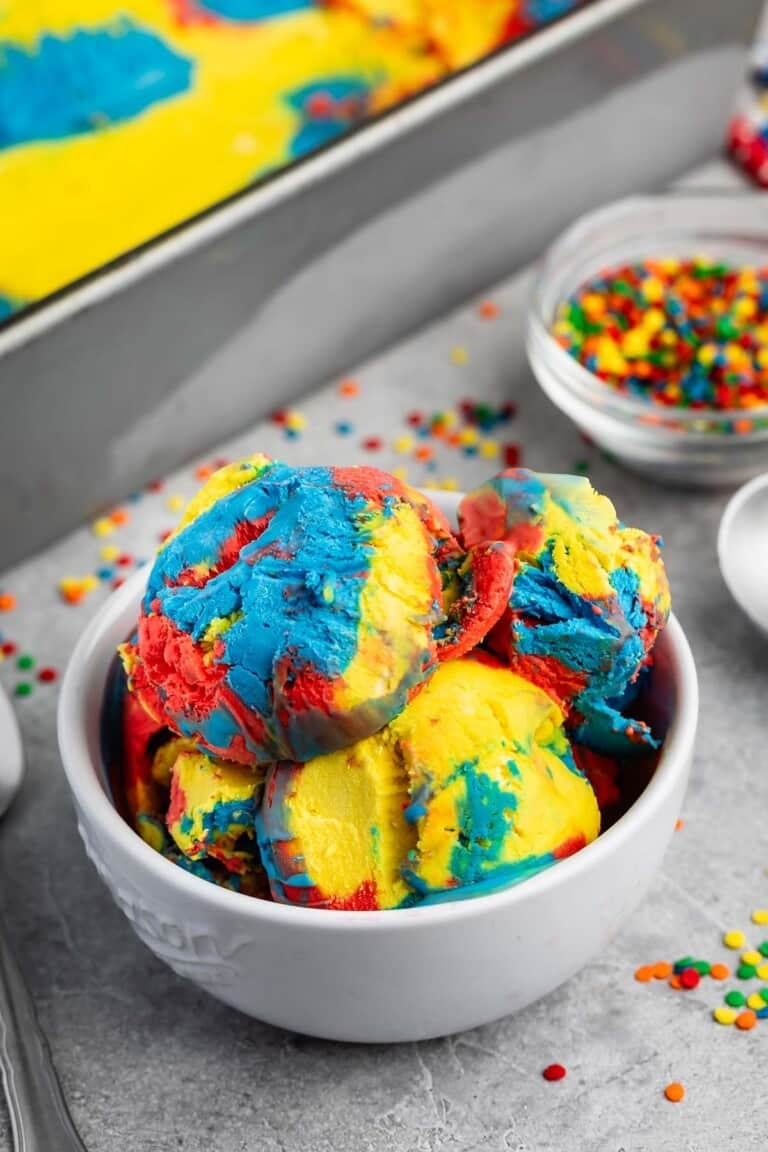

Superman ice cream exists because alcohol was illegal.
During Prohibition, breweries across the Midwest suddenly had infrastructure but no legal product to sell. They had refrigeration, distribution, neighborhood trust, and nothing to put through the system. Some pivoted into soda. Some pivoted into dairy. Ice cream became one of the practical survival moves that kept regional businesses alive.
That context matters, because Superman did not come out of a flavor lab. It came out of a volume problem.
Detroit-based Stroh’s Brewery is one of the early names tied to the origin story. When beer disappeared, ice cream stepped in, and like most creameries of that era, the goal was not elegance or balance. The goal was to move product in local shops.
People did not care about tasting notes. They cared about what they could see through the glass.
Blue Moon was already part of the Midwest landscape. Nobody could clearly explain what it tasted like, and that ambiguity was part of its power. Some versions leaned cereal-like. Some felt marshmallow-forward. Others carried citrus or almond notes. There was never a single formula, and no one was trying to standardize it. It was blue, it was regional, and it felt special.
Red flavors already sold reliably. Cherry and red pop read as candy and moved fast. Yellow or vanilla played the stabilizing role, giving parents something familiar enough to say yes to without a debate.
At some point, someone combined them. Not to create a perfect flavor, but to make the display louder.
The red, blue, and yellow combination jumped out from across the shop.
The name came afterward.
Superman was not chosen because it described the taste. It was chosen because the colors were already doing the work. Red, blue, and yellow matched the suit, and the name turned a scoop of ice cream into something symbolic. Ordering it felt like choosing an identity, not a dessert.
Over time, the formula drifted.
As Superman spread beyond the Midwest, many producers replaced Blue Moon with easier-to-source flavors like blue raspberry or Berry Blue. Those flavors were consistent, shelf-stable, and widely available, which made them operationally convenient. The problem is that Berry Blue solves the wrong issue. It creates flavor clarity where ambiguity was actually the feature.
Berry Blue tastes like something specific. Blue Moon never did.
That substitution is why some modern versions of Superman feel flatter than the remembered ones. The original worked because the blue portion was mysterious, inconsistent, and hard to define, which allowed memory to do more work than the palate. When you lock it into a defined berry profile, you trade recognition for precision, and Superman was never built on precision.
That is the part people miss.
Superman is not a single flavor, and it never was. Every producer made it differently, and that inconsistency did not hurt it. It reinforced the experience. People still do not ask what Superman tastes like. They ask if you have it.
It works because flavor does not begin on the tongue. It begins in the brain, through color, memory, and the confidence of making a loud choice. Superman bypasses refinement and goes straight to recognition.
That is why it survived Prohibition pivots, regional variation, and decades of copycat versions.

Share:
Xtra Laboratories Joins VapeSAFER to Advance Consumer Safety, Standards, and Innovation in Cannabis Vaping
Cannabis-Derived Terpenes: Complete Guide to Extraction, Profiles, and Product Applications