
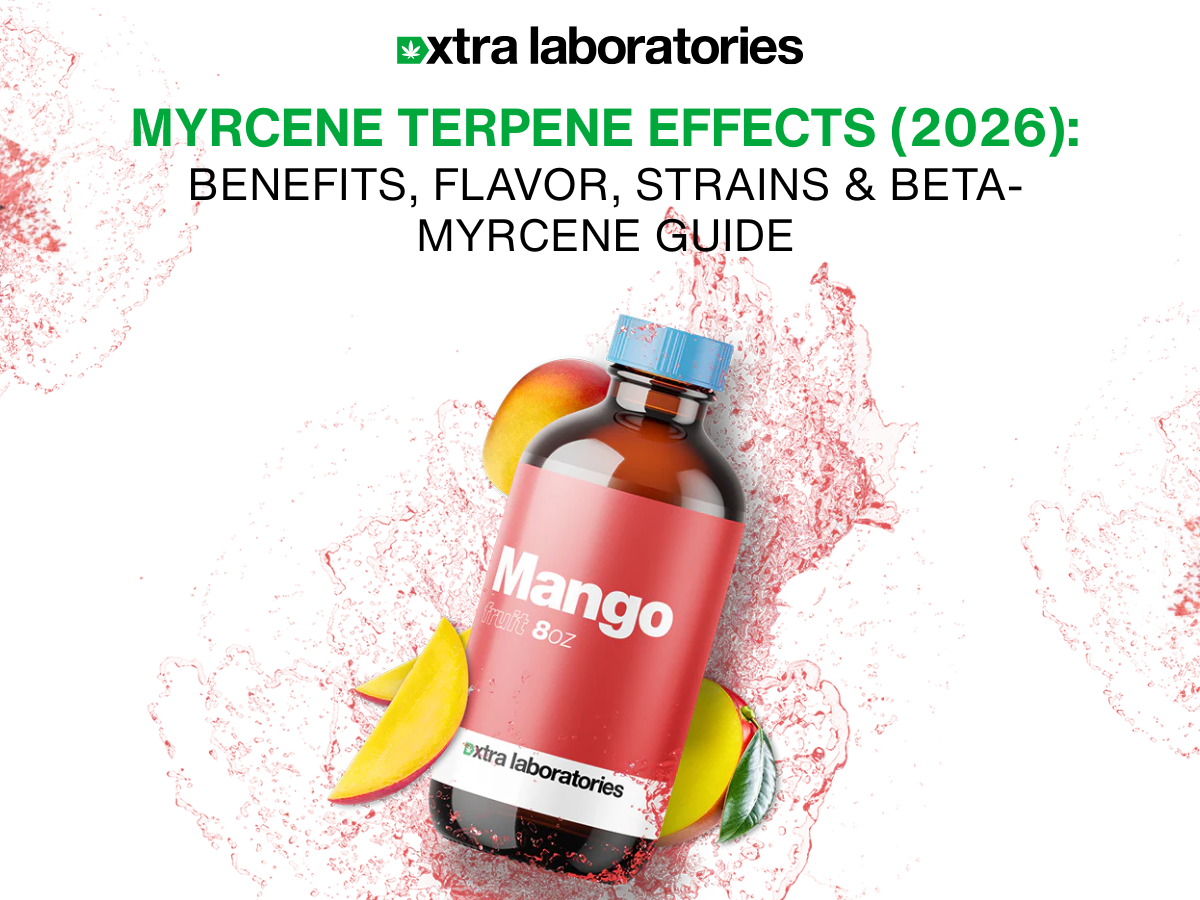

Myrcene is one of the most recognized terpenes across cannabis and botanical extracts, prized for its earthy, herbal aroma and its role in shaping product flavor and effect. As consumers and formulators focus more on terpene profiles, myrcene stands out for both its sensory impact and its prevalence in many popular strains. This guide covers myrcene’s chemistry, reported effects, flavor notes, strain associations, safety context, and what to look for when sourcing myrcene and beta-myrcene for formulations.
What Is Myrcene Terpene?
Myrcene (often called beta-myrcene in industry literature) is a monoterpene commonly found in cannabis, hops, lemongrass, mango, thyme, and other botanicals. Chemically, it’s a small, volatile hydrocarbon that contributes heavily to a plant’s aroma and volatility profile. In cannabis, myrcene often dominates the terpene fraction and helps define the overall sensory character of an extract or cultivar. While “myrcene” and “beta-myrcene” are often used interchangeably in commercial descriptions, the term beta-myrcene refers specifically to the naturally occurring isomer most commonly encountered in botanical extracts.
What Is Beta-Myrcene?
Beta-myrcene (b-myrcene) is the scientific name for the naturally occurring form of myrcene most relevant to botanical and cannabis applications. Its linear structure and double-bond arrangement are what give beta-myrcene its volatility and characteristic aroma. Industry references favor “beta-myrcene” to distinguish it from synthetic isomers or lab-derived analogs. For formulators and quality teams, specifying beta-myrcene helps ensure clarity about the exact terpene isomer in a product.
Myrcene Terpene Effects
Reported effects associated with myrcene are mostly based on aroma-driven experiences and preclinical studies rather than direct intoxicating properties. Commonly reported characteristics include:
- Relaxation and perceived “calming” sensations are present in higher concentrations.
- Enhancement of the overall body-forward character of a blend, often described as “earthy,” “musky,” or “herbal.”
- Synergistic interactions with cannabinoids and other terpenes that can influence a product’s sensory and subjective impact.
Myrcene contributes to entourage-style formulations by complementing heavier cannabinoid effects and balancing brighter terpenes like limonene or pinene. Consumers interested in myrcene-rich profiles often seek a more grounding, mellow experience.
What Is Myrcene Terpene Good For?
Formulators and consumers choose myrcene-rich terpene profiles for several reasons:
- Aroma enhancement: provides earthy, herbal, and musky baseline notes.
- Flavor development: smooths and rounds fruit-forward terpenes with warm, tropical undertones.
- Product formulation: useful in vape blends, tinctures, sprays, and topicals to impart depth without overpowering citrus or pine notes.
- Botanical blending: pairs well with caryophyllene, humulene, and pinene to create balanced, approachable profiles.
Myrcene’s sensory signature is distinct yet versatile:
- Earthy, herbal backbone
- Musky, clove-like undertones
- Subtle tropical fruit hints: often linked to mango affinities in popular lore
- Rounds out sharp citrus or resinous notes to create a smoother mouthfeel
These characteristics make myrcene a common choice for flavor-forward formulations that still require depth and warmth.
Which Cannabis Strains Are Known for Myrcene?
Many indica and indica-leaning hybrid strains show elevated myrcene levels. Examples frequently cited in terpene testing include:
- OG Kush (myrcene-forward in many phenotype reports)
- Blue Dream (hybrid examples often show significant myrcene alongside pinene/limonene)
- Granddaddy Purple and other indica-leaning varieties that carry an earthy, musky profile
Because myrcene biosynthesis is common in many cultivars, it appears across a broad set of strain families and is often the dominant terpene where a plant expresses a musky, fruit-adjacent aroma.
Which Terpenes Are Commonly Found in Indica Profiles?
Indica or indica-leaning terpene profiles commonly include:
- Myrcene (dominant earthy/musky note)
- Caryophyllene (spicy, peppery)
- Limonene (citrus lift)
- Pinene (pine fresh)
- Humulene (woody, hoppy)
These terpenes combine to create the fuller, more sedate aroma profiles often associated with indica varieties.
Is It Better to Have Higher or Lower Terpene Levels?
There’s no single “better” terpene concentration; it depends on product goals:
- Higher terpene levels: stronger flavor and aroma, more pronounced sensory effects, useful for flavor-forward products and aroma-driven experiences.
-
Lower terpene levels: subtler profiles, useful when cannabinoids or other actives must dominate, or when regulatory/sensory constraints require muted aroma.
Balance often beats concentration: carefully matched terpene blends achieve the desired flavor and subjective effect without overpowering the formulation.
What Terpene Gets You the Highest?
Terpenes do not cause intoxication; cannabinoids (THC, THCV, etc.) are responsible for psychoactive effects. Terpenes like myrcene can influence the subjective quality of an experience via aroma-driven and possible pharmacological interactions, but they are not intoxicating agents themselves. Understanding the cannabinoid-terpene relationship is key for accurate product positioning.
Why Was Myrcene Banned? Separating Fact from Fiction
Online confusion around “myrcene bans” stems from regulatory and historical context:
- Some regulatory bodies reviewed myrcene for food or fragrance use under specific conditions; isolated regulatory actions led to headlines that were misinterpreted as blanket bans.
- Today, beta-myrcene is widely used in food, fragrance, and botanical applications when purity and safety data meet regulatory requirements.
- Reputable suppliers provide third-party testing and safety documentation to ensure compliant use across industries.
What Is the Mother of All Terpenes?
In biosynthesis, terpenes form from precursor molecules like geranyl pyrophosphate (GPP) for monoterpenes and farnesyl pyrophosphate (FPP) for sesquiterpenes. There’s no single “mother” terpene, but these precursor compounds act as primary building blocks that enzymes transform into diverse terpenes: myrcene being one common outcome of monoterpene biosynthesis pathways.
Myrcene Terpenes for Sale: What to Look For

When sourcing myrcene (or beta-myrcene) for formulation, prioritize:
- Purity and specification sheets that list isomer content and impurities.
- Botanical source declaration (e.g., cannabis-derived vs. plant-derived such as hops, lemongrass).
- Third-party testing (GC-MS, GC-FID) showing terpene profile and absence of residual solvents or contaminants.
- Suitable grade for intended use (food, fragrance, cosmetic, or inhalable applications).
- Supplier transparency on harvesting, extraction, and batch traceability.
Featured Myrcene-Rich Botanical Terpene Profiles from Xtra Laboratories
Xtra Laboratories formulates terpene blends that showcase myrcene’s strengths while maintaining balance and stability. Featured profiles include:
- Super Lemon Haze Terpene Profile: citrus-forward with a grounding myrcene base for depth.
- Blue Dream Terpene Profile: hybrid balance with myrcene and pinene highlights for smoothness and lift.
-
OG Kush Terpene Profile: classic earth and resin notes with a myrcene-heavy backbone.
Explore these profiles for ready-to-use formulations or as starting templates for custom blends.
Frequently Asked Questions
What is myrcene terpene good for?
Myrcene is chosen for its earthy, herbal aroma, flavor-smoothing properties, and its ability to round other terpenes in blends. It’s useful in vape, topical, and product formulations seeking a warm, grounding note.
What terpene gets you the highest?
No terpene causes intoxication. Cannabinoids produce psychoactive effects; terpenes modulate aroma and may influence subjective experience through synergy.
Is it better to have higher or lower terps?
It depends on product goals. Higher terps = stronger aroma/flavor; lower terps = subtler sensory character. Balanced formulations typically perform best.
Which terpenes are in indica?
Common indica-associated terpenes include myrcene, caryophyllene, limonene, pinene, and humulene.
Why was myrcene banned?
Isolated regulatory reviews and misunderstandings caused confusion. Properly sourced beta-myrcene with safety data remains acceptable across many industries.
What is the mother of all terpenes?
There’s no single “mother” terpene. Biosynthetic precursors like GPP and FPP are the foundational building blocks that enzymes convert into diverse terpenes.
What does myrcene taste like?
Myrcene tastes and smells earthy, herbal, slightly musky, with faint tropical-fruit or mango-like nuances in blends.
Which strains contain high levels of myrcene?
Strains often reported as myrcene-rich include OG Kush, Blue Dream (variable by phenotype), Granddaddy Purple, and many indica-leaning hybrids.
Conclusion
Myrcene remains a cornerstone terpene in cannabis and botanical formulations for its earthy flavor, aromatic depth, and synergy potential with other terpenes and cannabinoids. Whether you’re developing a myrcene-forward strain profile or sourcing beta-myrcene for product blends, prioritize purity, botanical sourcing, and third-party testing. Xtra Laboratories’ myrcene-rich terpene profiles and formulations provide practical, lab-verified solutions for brands that want reliable flavor, aroma, and balanced sensory experiences.
Share:
The Most Common Cannabis Terpenes & Their Effects
Limonene Terpene Effects: Citrus Aroma, Cannabis Profiles, and Botanical Applications